The Joke is on Whom?
If we weren't currently suffering under our current administration, I'd ask, "Are you kidding?" Unfortunately we know that
he's not.
The Taliban must promise to disassociate from international terrorism and affirm their desire to participate in tentative talks on a political settlement to the war in Afghanistan, a senior U.S. official said on Sunday.
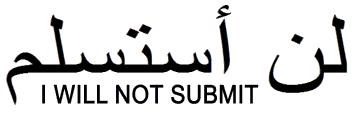
The Taliban is only willing to negotiate the terms of our surrender. We are the infidel. The Taliban take the Quranic command to fight the infidel until all men acknowledge Allah as God and Mohammed as his prophet. Don't forget that it is written,
Chapter 9, verse 29 of the Qur'an reads:
"Fight those of the People of the Book who do not [truly] believe in God and the Last Day, who do not forbid what God and His Messenger have forbidden, who do not obey the rule of justice, until they pay the tax and agree to submit."
I'm sure in lieu of conversion, they will accept the jizyah. Either way, the sacrifice in American lives and bodies has been wasted. Men and women who were beyond the understanding of the petty, spineless schemers in Congress and the White House, have been sacrificed so that the base scum who inhabit the American halls of power can, Scrooge-like, keep their gnarled, morally diseased fingers on their ill-gotten gains.
Gibbon wrote of the Eastern Roman Empire in decline, a time when weak, ineffective, emperors ruled, one after another, watching the remains of a former great empire, built by great men at a time when great men were allowed to rise to the top, slowly get eaten away by foreign and domestic enemies they were too weak to effectively confront. The strong among the Greeks, if there were any, were silenced and ignored by court eunuchs and their followers who were more interested in keeping their plum positions than in doing what was best for their people.
And today we have the Democrats.

Labels: Afghanistan, Democrats, Gibbon, Obama, Taliban
Fourth of July Thoughts
In today's Detroit Free Press,
Stephen Henderson offered his views on the Fourth of July. Being an editor at the liberal Free Press, Henderson is no simple-minded cheerleader for America. Sure, we can celebrate, but we also have to acknowledge those less than savory episodes in our country's history.
But the Declaration's principal author, Thomas Jefferson, and its signers in the Continental Congress were clouded by a much more complex morality, principally hobbled by their inability to ensure that the independence they were asserting for themselves would apply to everyone.
and
There are, for example, our historic struggles with gender equality and the current debate over equal protection for gay Americans. You can see it in arguments over how we treat our enemies in the war on terror and how a nation of immigrants welcomes -- or shuns -- those who want to share in our freedom.
Of course, he's going somewhere with this. And it's his next sentence.
America is a journey toward perfection, defined by its struggles to overcome the frailty of human imperfection.
Perfection? Understanding that all we have to work with in this country, and on this planet, are imperfect, fallible human beings,
the quest for perfection is strictly for suckers. I think we have to understand that first, and look at the other plans throughout history that sought perfection, but found instead
slavery,
fascism, and
death.
I began rereading volume II (out of 3) of Gibbon's
Decline and Fall of the Roman Empire (my summer reading project) and came across the following quote:
A people who still remembered that their ancestors had been the masters of the world would have applauded, with conscious pride, the representation of ancient freedom, if they had not long since been accustomed to prefer the solid assurance of bread to the unsubstantial visions of liberty and greatness.
And then there was this, by
Nolan Finley in today's Detroit News:
Voters in Port Chester, N.Y., went to the polls last month carrying six votes each to cast in the village board election. They could spread them out among multiple candidates, or plunk them all for one favorite. They were also allowed to cast ballots over a five-day period.
The hope of federal Judge Stephen Robinson was that Hispanics, who make up nearly half the Port Chester populace, would target their six votes each at Hispanic candidates, thus achieving his goal of crafting a board more demographically in line with the local population.
Robinson ordered the scheme, called cumulative voting, under the federal Voting Rights Act, which has turned into one of the greatest perversions of democracy ever imagined. The judge acted on complaints that despite their large presence in the community, Hispanics had never managed to win a seat on the board.
There was no evidence that Hispanics were being kept from the polls or discouraged from voting. Nor was there anything stopping Hispanic citizens in the past from pooling their considerable single votes behind one Hispanic candidate. But the fact that a Hispanic hadn't been elected was evidence enough for the judge to determine racial discrimination was at work.
Even some Hispanic voters found the solution unnerving.
With that kind of voting, why do we need people to vote at all? Our wise progressive judges can let us know who the winners should be, and then votes can be appropriately divided so that the correct candidate wins. All candidates will receive at least some of the votes. Self-esteem of the candidates must also be a consideration . . . mustn't it?
Off to the barbecue!
Labels: Decline and Fall of the Roman Empire, Detroit Free Press, Detroit News, Fourth of July, Gibbon, Nolan Finley
The Decline and Fall of the Roman Empire - Part II
One thing I forgot about in my first post on Gibbon; he was viciously anti-Semitic. All of his descriptions of Jews and Judaism are outrageous. He accuses Jews of cannibalizing their defeated enemies. That's just stupid. Observant Jews, which would have been the entire Jewish community at the time, wouldn't have eaten people. People aren't kosher. We don't have split hooves, and unless you consider chewing gum, we have no cud to chew. He also accuses the Jews of Rome of starting the infamous fire that the Emperor Nero was said to fiddle during. And it was (according to Gibbon) the fault of the Jews that Christians were persecuted. I think it's another one of those British attitudes.
I'm not sure Gibbon's anti-Semitism is ever discussed, probably because his Decline and Fall is a such an otherwise magnificent piece of scholarship and writing. As I said in
part I (if I remember correctly), the man could construct a sentence and describe a character better than most novelists. He did have an advantage over writers of fiction though. These were real people he was fleshing out for us. He merely had to find the right words.
During Rome's decline, when one emperor after another was being raised and then violently dispatched, it was clear that the virtuous men of genius who ruled Rome and fought for Roman interests during its ascension in centuries past, were either no longer available or they weren't being allowed to rise up from the multitude. Instead, there was a centuries long parade of scoundrels, usurpers, and con men, who had abbreviated reigns wearing the purple. The great were sometimes thrust into the throne, but they were the exception.
As Gibbon would begin his descriptions of each new emperor rising or being forced to the top during the tumultuous third and fourth centuries A.D., I wondered each time how long this one would last and what manner of violent end he would suffer, because they all came to violent ends, the good, the bad, and the indifferent. Major exceptions were Diocletion, Julian, and Constantine, but try as they might, they couldn't halt Rome's decline. The best they could do was to slow it down.
By this time, corruption reigned and the edges of the empire were being eaten away by the barbarians Rome could no longer control, but only negotiate with in-between increasing futile wars. Rather than handle the barbarians, whom I think had embraced certain aspects of civilization over the centuries, and who were being squeezed by the Scythians (who were even more barbaric) on the other side, Rome chose to negotiate when they needed to concentrate on internal problems. Who did these negotiations help the most? Well, it wasn't the Romans.
The West (Rome) discovered (and then promptly forgot) the lesson on letting a cruel barbarian tyrant grow strong by neglecting to squash him when he's weak. What is it with humanity? Don't we ever learn?
When corruption becomes the order of the day, when it's not only tolerated but expected, when society has lost its memory of what responsibilities we all must fulfill to pass our civilization on to our children, how do "we the people" maintain a civil free society? The Romans were finally overwhelmed by their own pathologies, which weakened them enough for outside forces to invade and finish the job. It was a long process though, and as each generation contributed to their share of Rome's decline, whatever they were living through was their normalcy, no matter how degraded they would have appeared to their ancestors.
Does this story hold lessons for we the living of today? Sure it does. Will we listen? We never have.
Next summer, I will reread volume II. I'm looking forward to it.
Labels: anti-semitism, books, Decline and Fall of the Roman Empire, Gibbon, Jews
The Decline and Fall of the Roman Empire - Part I
After I finished reading it the first time a few years ago, I didn't think I'd ever want to read it again. But over the years, I've read about it from writers whom I respect. They talked not only about what a great history it is, and how it relates to today's world, but about what a great read it is. I didn't think it was so great upon first reading. But this time, I took it slowly. The first time, I just wanted to get through it. It was tedious. This time I paid attention, and I discovered that all of those people talking about what a great writer Gibbon was, are right. I read the
first volume, all 956 dense, footnoted pages over the past month. I really enjoyed the journey this time. The Latin and Greek footnotes did slow things down, but most of the footnotes in English were worth reading. And of course, Gibbon doesn't just tell the story, he tries to teach us lessons in morality and proper living. He tries to show the difference between excellent governance and poor governance. He gives us portraits of the great, the not so great, and the truly awful. Gibbon has this to say about the sons of Constantine and the conflict among them.
After the partition of the empire three years had scarcely elapsed before the sons of Constantine seemed impatient to convince mankind they were incapable of contenting themselves with the dominions which they were unqualified to govern.
He charts the rises and falls of emperors, generals, great men and scoundrels. And he does so with intelligence and wit that is rarely found in any of today's histories.
People don't write like that any more. The big histories of today are full of minutiae. They include everything but the kitchen sink. Gibbon covers too much ground for that, but he still tells a great and marvelously entertaining story and gives enough detail to make the reader ponder and feel the tragedy that the fall of the Roman Empire wrought through Europe, N. Africa, and E. Asia. The Romans were the superpower of their day. They kept order throughout their lands and the surrounding lands. When they began to self-destruct, order was reduced. Brigands, barbarians, and other opportunists were able to make life miserable for everyone. The suffering caused by this collapse lasted for a thousand years.
As with other great histories, this one is not only about one people during one time. It is the story of ancient and modern empires and superpowers. And it's the story of people and how they act and react. As much as we'd like to think otherwise, people haven't changed much over the past few thousand years. Corruption of morals is universal.
Tiberius, and those emperors who adopted his maxims, attempted to disguise their murders by the formalities of justice, and perhaps enjoyed a secret pleasure in rendering the senate their accomplice as well as their victim. By this assembly the last of the Romans were condemned for imaginary crimes and real virtues. Their infamous accusers assumed the language of independent patriots, who arraigned a dangerous citizen before the tribunal of his country; and the public service was rewarded by riches and honours. (55) The servile judges professed to assert the majesty of the commonwealth, violated in the person of its first magistrate; (56) whose clemency they most applauded when they trembled the most at his inexorable and impending cruelty (57) The tyrant beheld their baseness with just contempt, and encountered their secret sentiments of detestation with sincere and avowed hatred for the whole body of the senate.
Today, it is reputations that are murdered, but in
Judaism, that is believed to be as great crime as stealing from or cheating another.
The minds of despots throughout history work the same.
In the administration of justice, the judgments of the emperor were characterised by attention, discernment, and impartiality; and whenever he deviated from the strict line of equity, it was generally in favour of the poor and oppressed; not so much indeed from any sense of humanity, as from the natural propensity of a despot, to humble the pride of greatness, and to sink all his subjects. to the same common level of absolute dependence.
Along with using the iron fist to earn the fear of the subject people, pander to the lowest among them and gain their gratitude. Wealthy scapegoats are the best.
I could go on quoting Gibbon as there are so many passages worth quoting, but I won't. Other points Gibbon makes though, are that as the empire declined, pomp and glorious titles increased. Emperors had greater retinues, more slaves, bigger entourages as their power and prestige declined. Superficial aspects became more pronounced as the insides rotted. While the army and praetorian guard named then assassinated emperor after emperor, the Roman people were given their bread and circuses in an effort to keep them mollified. There were good emperors and bad ones, but for a lengthy period, none of them died a natural death.
There were attempts to rebuild, but after a steady decline, and the slaughter of so many Romans in civil wars, the momentum was impossible to reverse.
Stay tuned for part II.
Labels: books, Decline and Fall of the Roman Empire, Gibbon
War's legitimate object is more perfect peace. Flavius Vegitius Renatus
This is an optional footer. If you want text here, place it inside these tags, and remove this comment.


 CHALLAH AKBAR