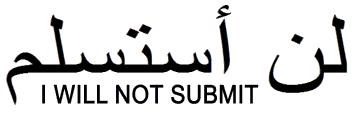
Burn, Baby, Burn
First of all, publicly
burning a Qu'ran is a stupid thing to do. Being a book lover, I look at the burning of any book, even a lousy one, as a desecration. The "pastor" in charge of this fiasco needs to find a more intelligent way to make his point, like maybe doing some research into Islam so that he can spread that information. The more people who understand Islam and the terror and abuse it has spread, the brake it's put on freedom and civilization, the better we infidels will be able to battle it, along with its Leftist dhimmi enablers.
So far, the best commentaries on this silly episode come from
Debbie Schlussel Here’s what I view as far more offensive than the burning of Korans: that the outrage over this is more so than the outrage of any Islamic murder of Americans, any jihadist beheading videos featuring Westerners being slaughtered in the name of the Koran.
and
Ann Coulter Also, as I recall, there was no Guantanamo, no Afghanistan war and no Iraq war on Sept. 10, 2001. And yet, somehow, Osama bin Ladin had no trouble recruiting back then. Can we retire the "it will help them recruit" argument yet?
Michelle Malkin does a good job of reminding us that there are always Muslims somewhere outraged over something we in the West are doing or not doing.
I keep wondering when some big time pundit will point out that this tells us more about both Islam and the West than either their our our leaders are willing to admit. We are bombarded with worry warts insisting that this Qu'ran burning will be a tremendous recruiting tool for Al-Quaeda and the Taliban. These days it's hard to find any behavior from the West that isn't claimed as a propaganda coup for Islamic terrorists; cartoons of Mohammed, protests against the "Ground Zero Mosque", killing terrorists, the list is endless.
If, as we are constantly assured by the apologists, that it is only a "tiny minority" of Muslims who engage in terrorism, where are they finding so many Muslims who are inspired to be terrorists at the slightest provocation? Wait - not provocation - it's any act that any Muslim finds distasteful. And if it isn't terrorism, there will be riots, lots of riots featuring burning American flags, screaming, ranting, and more than a few random murders from outraged members of what we are - again - constantly assured, is a religion of peace (just chock full of Ghandis don't you know) . . . as long as we follow their rules, you know, as long as we act as dhimmis. If they're as peaceful as the apologists claim they are, why are they so damn easy to provoke?
It's past time to let the Islamic world know that we aren't interested in being lorded over by misogynistic, insecure, tyrannical, parasitic, seventh century barbarians. But that's the problem, isn't it? Our spineless leaders, along with our mainstream media, is afraid to take that stand. Somehow, they continue to take the coward's way out and insist that - really, it really is a religion of peace, honest, and anyone who claims otherwise is an "Islamophobe." And this is from the leaders and elites of the richest, most powerful society ever developed by mankind. They have decided to wimp out. It's every infidel for himself.
The Roman historian, Tacitus insisted that in order to remain strong, a society needs to be engaged in constant warfare (but I can't find the exact quote). Stop fighting, and men become lazy and indolent. I've never been much of a fighter myself, but as I've gotten older, and had a family, and have finally come to the understanding that there are things worth fighting for, and sometimes one does have to stand up or be trampled on, I've become more willing to stick my neck out, raise my voice, and challenge the enemies of civilization. While I don't relish war, when you compare Islam to the West, not only are they willing to die (but for all the wrong reasons), they're willing to watch their children die too, if not murder them outright. Meanwhile, our children are learning that there is nothing worth fighting for, that's in morally superior not to fight, and if we just reach out to our enemy, not think of them as "the other" and try and understand their grievances against us, and compromise, we will all learn to love one another and live together in peace and harmony, if you accept slavery as peace and harmony.
I'm sure our wonderful elites would make great slaves. They could work and demonstrate their moral superiority at the same time.
Labels: Ann Coulter, Debbie Schlussel, islam, Koran, Michelle Malkin, MSM, Tacitus
Fun Facts from Tacitus
Reading the ancient historians, you really have to pay attention. While at times, they tell fascinating stories that resonate throughout the ages, there are times, I must admit, that things can get dull, kind of that "one thing after another" syndrome. Sometimes things are happening so quickly that you get lost in the names and events that may only get a page or perhaps even a sentence of description. As an example, I found Livy's history of early Rome dull in parts, but later, when he stretches out in his retelling of the Second Punic War, he creates quite the page-turner.
Tacitus (in a well annotated edition) is really interesting. The man could tell a good story. Sometimes too, you just come across unexpected tidbits. I recently read the W. H. Fyfe translation of The Histories by Tacitus. I found it well done. It was readable, and made sense. It was modern enough to flow easily through my mind. That doesn't always mean better, but compared to
this translation on the web, I prefer Fyfe. Due to the fact that I'm lazy and don't feel like typing passages from the book though, I'm quoting from the web.
Our first selection is from book 1:
22. The soul of Otho was not effeminate like his person. His confidential freedmen and slaves, who enjoyed a license unknown in private families, brought the debaucheries of Nero's court, its intrigues, its easy marriages, and the other indulgences of despotic power, before a mind passionately fond of such things, dwelt upon them as his if he dared to seize them, and reproached the inaction that would leave them to others. The astrologers also urged him to action, predicting from their observation of the heavens revolutions, and a year of glory for Otho. This is a class of men, whom the powerful cannot trust, and who deceive the aspiring, a class which will always be proscribed in this country, and yet always retained. Many of these men were attached to the secret councils of Poppaea and were the vilest tools in the employ of the imperial household. One of them, Ptolemaeus, had attended Otho in Spain, and had there foretold that his patron would survive Nero. Gaining credit by the result, and arguing from his own conjectures and from the common talk of those who compared Galba's age with Otho's youth, he had persuaded the latter that he would be called to the throne. Otho however received the prediction as the words of wisdom and the intimation of destiny, with that inclination so natural to the human mind readily to believe in the mysterious.
At this point in our story, Galba is emperor, having taken over upon the death of Nero. An astrologer predicts to Otho that he will be replacing Galba on the throne. Otho accepts that prediction and goes on to overthrow Galba. He is then overthrown by Vitellus, who is in turn, overthrown by Vespasian, who serves for nine years. All of this overthrowing stuff takes place in the space of a year - a year of civil war.
If we replace the name Otho with the name Macbeth, substitute three witches for the astrologer, and change the author's name to Shakespeare, . . .
At the beginning of book five:
1. EARLY in this year Titus Caesar, who had been selected by his father to complete the subjugation of Judaea, and who had gained distinction as a soldier while both were still subjects, began to rise in power and reputation, as armies and provinces emulated each other in their attachment to him. The young man himself, anxious to be thought superior to his station, was ever displaying his gracefulness and his energy in war. By his courtesy and affability he called forth a willing obedience, and he often mixed with the common soldiers, while working or marching, without impairing his dignity as general. He found in Judaea three legions, the 5th, the 10th, and the 15th, all old troops of Vespasian's. To these he added the 12th from Syria, and some men belonging to the 18th and 3rd, whom he had withdrawn from Alexandria. This force was accompanied by twenty cohorts of allied troops and eight squadrons of cavalry, by the two kings Agrippa and Sohemus, by the auxiliary forces of king Antiochus, by a strong contingent of Arabs, who hated the Jews with the usual hatred of neighbours, and, lastly, by many persons brought from the capital and from Italy by private hopes of securing the yet unengaged affections of the Prince. With this force Titus entered the enemy's territory, preserving strict order on his march, reconnoitring every spot, and always ready to give battle. At last he encamped near Jerusalem.
What can we say about that? It began, so the story goes, with Jacob and Esau. It continues to this day. To Tacitus, who was unclear on that history, it was glossed over as just the usual hatred between neighbors.
And time still marches on.
Labels: Arabs, books, Jews, Shakespeare, Tacitus
Alexander Solzhenitsyn
I can't add much to what's already been written upon the death of Alexander Solzhenitsyn. I remember the hoopla surrounding his exile to the United States back in the 70's. I remember people writing about his books. I even read one, One Day in the Life of Ivan Denisovich. I'm sure that's the one that most other people read who only read one of Solzhenitzyn's books. It's short. But it's a great book. I reread it about a year ago. I got the greater appreciation of it that comes with age, experience, and the knowledge that, although it is a work of fiction, it's based on facts that he and millions of Russians had lived through, and that others still live through today, whether in Russia, or one of the other tyrannies on this planet. I also remember reading an interview with him. He said the book was based on a good day in the gulag. We wouldn't be able to stand reading about a bad day.
Over at
American Digest, there's a link to
Solzhenitsyn's 1978 Harvard commencement speech. It packs quite a punch. He didn't think the American mall culture was all that great. Living only to hoard vast quantities of merchandise was not his idea of a life well spent. He also condemned the lack of courage in our elites.
A Decline in Courage [. . .]
may be the most striking feature which an outside observer notices in the West in our days. The Western world has lost its civil courage, both as a whole and separately, in each country, each government, each political party and of course in the United Nations. Such a decline in courage is particularly noticeable among the ruling groups and the intellectual elite, causing an impression of loss of courage by the entire society. Of course there are many courageous individuals but they have no determining influence on public life. Political and intellectual bureaucrats show depression, passivity and perplexity in their actions and in their statements and even more so in theoretical reflections to explain how realistic, reasonable as well as intellectually and even morally warranted it is to base state policies on weakness and cowardice. And decline in courage is ironically emphasized by occasional explosions of anger and inflexibility on the part of the same bureaucrats when dealing with weak governments and weak countries, not supported by anyone, or with currents which cannot offer any resistance. But they get tongue-tied and paralyzed when they deal with powerful governments and threatening forces, with aggressors and international terrorists.
Should one point out that from ancient times decline in courage has been considered the beginning of the end?
and
no weapons, no matter how powerful, can help the West until it overcomes its loss of willpower. In a state of psychological weakness, weapons become a burden for the capitulating side. To defend oneself, one must also be ready to die; there is little such readiness in a society raised in the cult of material well-being. Nothing is left, then, but concessions, attempts to gain time and betrayal.
From 1978 until today I think things have only gotten worse. Facing the Islamofacists, many of our leaders, our MSM, and our intellectual elites have gone even further into their default mode of preemtive surrender. Those of us who refuse to submit are marginalized. We're called racists, Islamophobes and worse. Much like the image of the terrorist is softened by referring to Hamas and Hezbollah as "militants" and "extremists", we who try to get our leaders to fight against them (or at least call them by their proper title) get also get labeled as extremists. Somehow, sitting at a computer writing about the dehumanizing aspects of Sharia law and questioning why so many in the West are submitting to the demands of a theocratic, totalitarian movement firmly lodged in a seventh century desert culture, makes us the equivalent of Islamic murderers of infidel women and children.
Back when I was young, and manufacturing jobs were being lost to automation, many writers,(including Eric Hoffer, which proves that nobody is 100% right) predicted that people would now have more time to devote to study and would be able to make time for science, history, philosophy, and the general improvement of the intellect and the soul. Who could have predicted that with so many "great shows" to watch on TV, that there wouldn't be as much time for self-improvement as we thought?
Right now, I'm near the end of Tacitus' Histories. In it, he relates the period of civil wars between the death of Nero and the ascension of Vespasian to the post of Emperor. In between those two, there were three other very short-term emperors who ruled for as long as their loyalists could keep them in power. The whole period was about a year long. One of Tacitus' themes in this work, and apparently it's echoed by other ancient historians, is that extended periods of peace make us weak and lazy. He gives examples of Roman legions being given too much freedom or too much laxity, and then being useless in battle, or worse, becoming whiners, not willing to do their jobs, attacking their commanders, and degenerating into mobs. According to Gibbon, if I remember correctly, this period of history is shortly after the beginning of the decline of the Roman Empire.
So we don't want to fight for our own freedom. We want to shop for goofy stuff, as shown in
this post at Pen of Jen, and hope that all of the bad things go away by themselves (or maybe if we are really good, and we vote correctly in November, the Obamessiah will create a progressive utopia for all of us).
Personally, I prefer peace. I've changed though. I understand now, as I didn't understand very well as a young punk, that there are times when you do have to stand up and fight for what you believe in, because if you don't, someone will take valuable things away from you, you know, things like liberty, freedom, and perhaps your life. I understand that we in the United States do have enemies that want to destroy us in the worst way and that we have to defend ourselves against them. I understand that we, like other western nations have lost some of the moral clarity that allows us to do what we need to do. Look what's
happening in
Canada. They are slowly, in the name of multiculturalism and freedom from insult, knuckling under to the demands of the Islamists in their midst.
Has peace and the greatest prosperity in the history of mankind caused us to lose our spiritual way? The following quote is another piece of Solzhenitsyn's speech, but Tacitus might agree with it.
If humanism were right in declaring that man is born to be happy, he would not be born to die. Since his body is doomed to die, his task on earth evidently must be of a more spiritual nature. It cannot unrestrained enjoyment of everyday life. It cannot be the search for the best ways to obtain material goods and then cheerfully get the most out of them. It has to be the fulfillment of a permanent, earnest duty so that one's life journey may become an experience of moral growth, so that one may leave life a better human being than one started it. It is imperative to review the table of widespread human values. Its present incorrectness is astounding. It is not possible that assessment of the President's performance be reduced to the question of how much money one makes or of unlimited availability of gasoline. Only voluntary, inspired self-restraint can raise man above the world stream of materialism.
I admit, I want stuff. I want specific stuff, but it's still stuff. I want books. I could spend a huge amount of money on the books I want. I could spend another huge amount on the CD's that I want. I don't need them, but I want them. It's an aspect of my life I have to examine.
Solzhenitsyn has given me a lot to think about. At some point, when I have a few extra dollars in my pocket, I'm going to pick up a used copy of The Gulag Archipelago. They're all over the place in every used book store I visit. I've seen them all the time for years, but like everyone else, I paid no attention to the book until the death of the author put it back in the public eye. I imagine it was due to the size of the book, but a lot of people who bought it, dumped it without reading it. That's good for me because I'll be able to get a nice used copy cheap and have many hours of reading pleasure. And I think it's a book worth owning so I can justify buying it. It's not just stuff. It's a twentieth century classic by a Nobel prize winning author and man who demonstrated more bravery and fortitude than I hope I ever have to demonstrate.
Labels: books, Solzhenitsyn, Tacitus
War's legitimate object is more perfect peace. Flavius Vegitius Renatus
This is an optional footer. If you want text here, place it inside these tags, and remove this comment.


 CHALLAH AKBAR